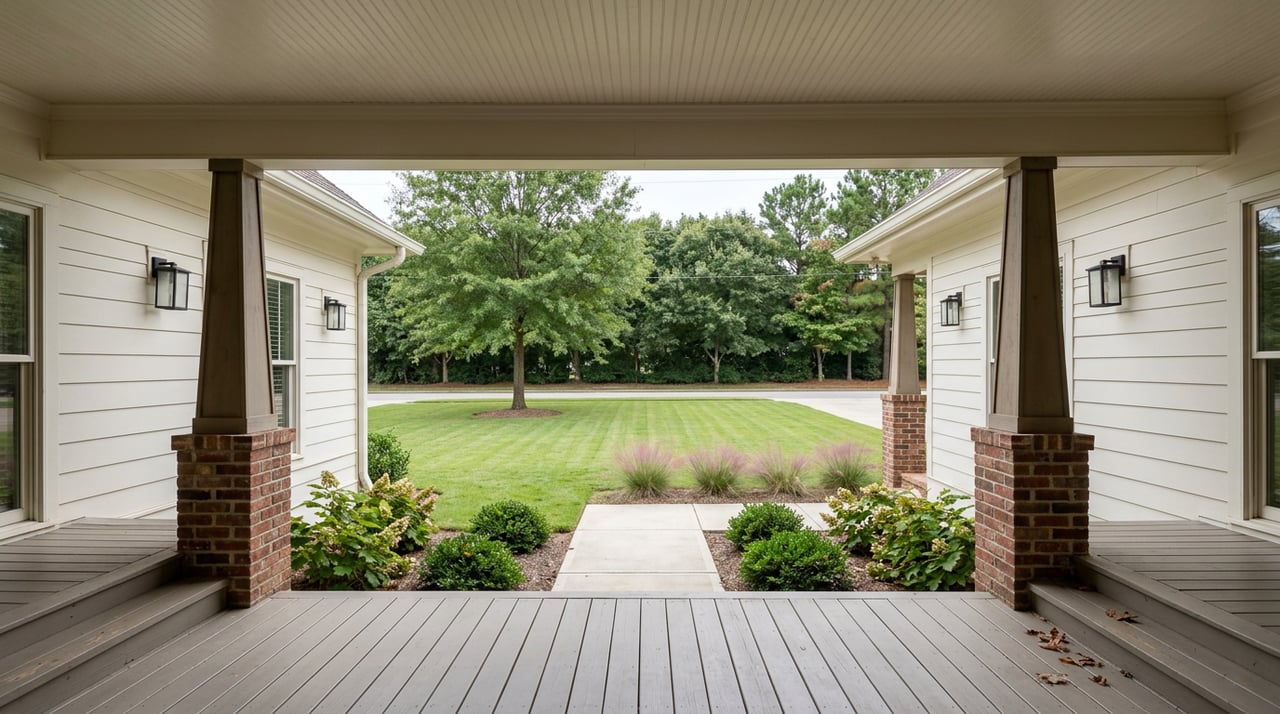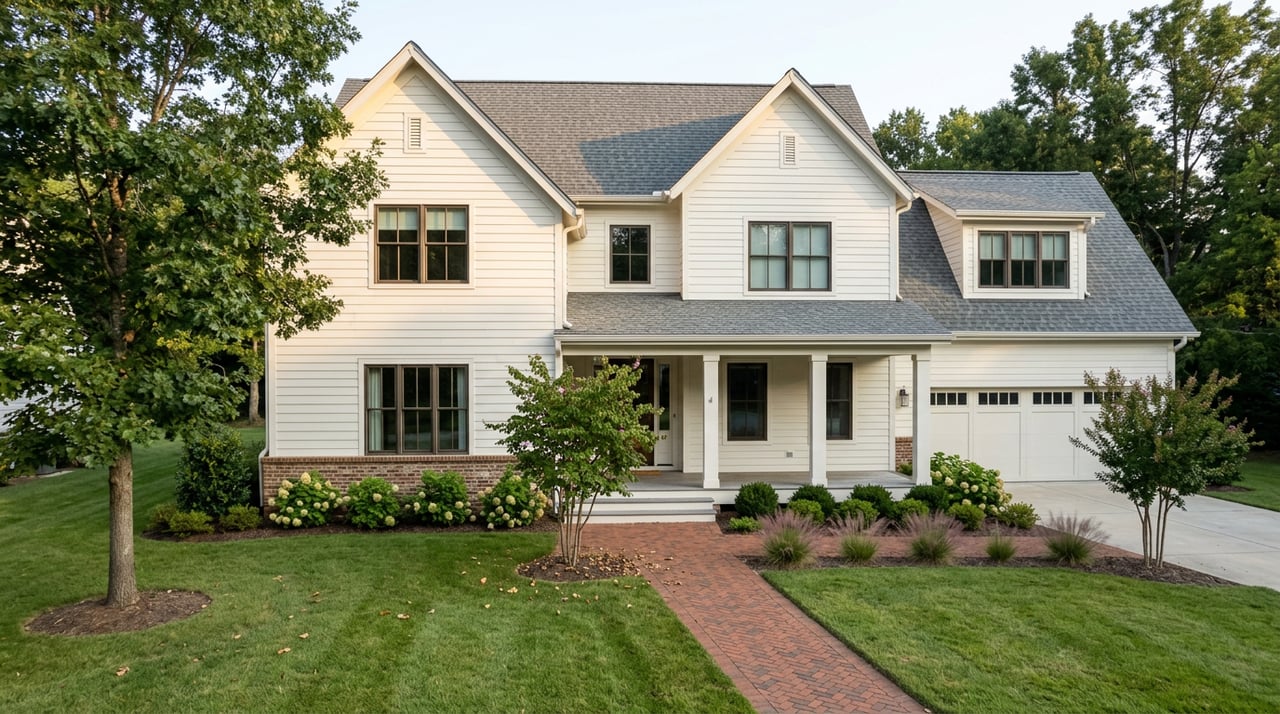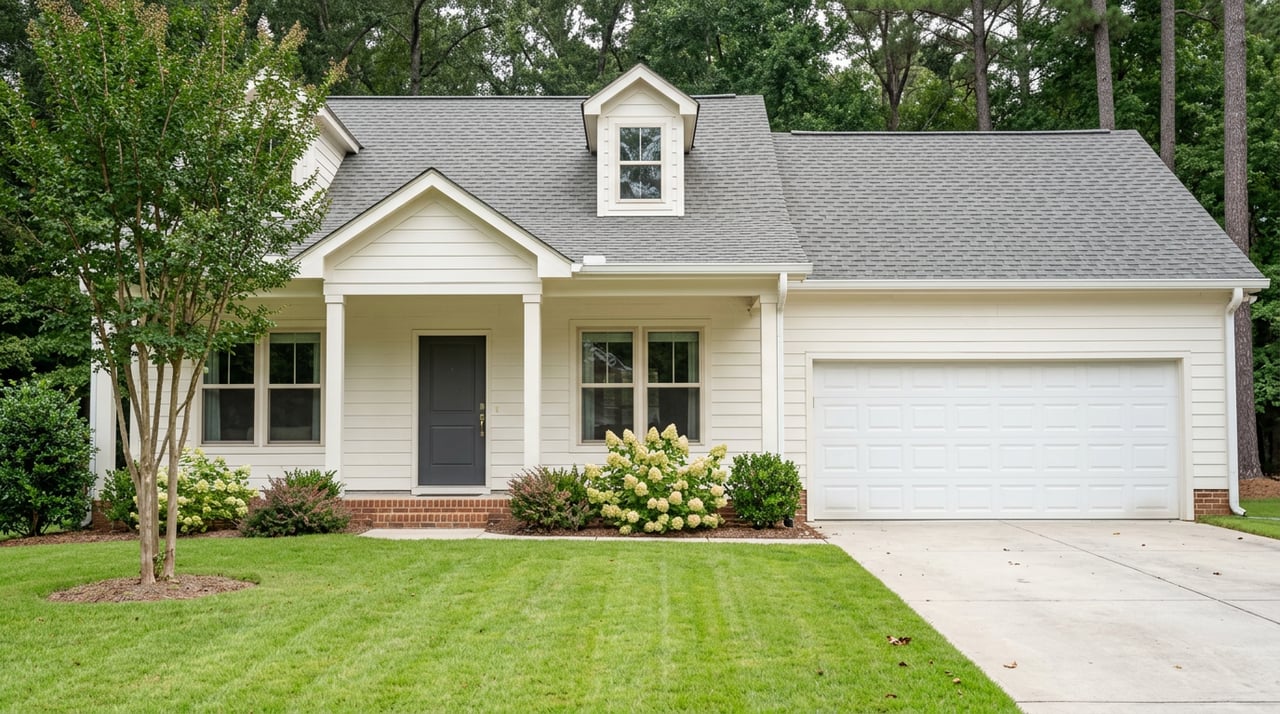
Two houses can sit on the same road in Rolesville, share a zip code, show up in the same school assignment zone, and still answer to two entirely different governments. One pays a town property tax rate. The other doesn't, because it isn't technically in town at all. One calls Rolesville's Planning Department when a fence permit is due. The other calls Wake County. Neither buyer would guess this from the listing photos, the address, or the sign in the yard.
This isn't a hypothetical. It's how North Carolina's extraterritorial jurisdiction system works, and Rolesville has been growing fast enough that the line between "in town" and "in the county, but regulated by town" now runs through some of its newest neighborhoods. If you're comparing two homes in Rolesville right now, this line is worth understanding before you write an offer, not after closing.
The Boundary the Listing Photos Never Show
Rolesville's own planning department draws a clear distinction between two categories of land it touches: the Town's corporate limits, and its Extraterritorial Jurisdiction, or ETJ. Under state law, Rolesville can apply its zoning, subdivision, and land development rules to parcels in unincorporated Wake County that sit just outside its actual boundary. The town has formal annexation agreements with Wake Forest and Raleigh covering the unincorporated land between the three towns, and its planning staff will tell you outright that the only way to know for certain which side of the line a property falls on is to check the zoning map, not the address.
That matters because "Rolesville" as a mailing address and "Rolesville" as a governing jurisdiction are not the same thing. A parcel can be zoned and permitted by the town, marketed as Rolesville, and still be legally part of unincorporated Wake County for tax and voting purposes.
What Actually Changes When You Cross the Line
The differences aren't cosmetic. A few of the ones that show up during a real transaction:
- Property tax. Homes inside corporate limits pay the town's property tax levy on top of the county rate. Homes in the ETJ pay only the county rate, because they aren't incorporated. Over the life of a mortgage, that gap adds up.
- Permitting and inspections. Rolesville partners with the Wake County Inspections & Permits Department for building permits, using the county's ENERGOV portal, and Wake County's own Building Code applies. The Wake County Fire Department handles fire code enforcement. If your renovation touches water or sewer, the City of Raleigh's Public Utilities permit portal gets involved too. None of this runs through a single office, and which office you need depends on which side of the ETJ line you're standing on.
- Voting. This is the one that surprises people most. Under North Carolina law, property owners inside a municipality's ETJ do not get to vote in that municipality's elections, even though they're subject to its zoning and building rules. You can be told exactly how tall your fence can be by a town you have no say in electing.
Rolesville does carve out one small exception to that last point. Its Board of Adjustment, the quasi-judicial body that hears variance requests and special use permits, is required to include two members who actually live in the ETJ. It's a narrow form of representation, limited to one advisory board, but it's a deliberate acknowledgment that ETJ residents live under rules they can't vote on anywhere else.
The Water Bill Doesn't Care Which Side You're On
One thing that doesn't split along the ETJ line: your water bill. Raleigh Water serves more than 650,000 residents across Raleigh, Garner, Wake Forest, Rolesville, Knightdale, Wendell, and Zebulon, regardless of which town's zoning applies to your lot. Rates approved for the 2026 fiscal year raised base and consumptive charges by 4.0 percent starting July 1, 2025, an average increase of $1.91, or 3.5 percent, for a typical residential customer on a 5/8-inch meter.
The wrinkle worth knowing: that increase applies with proportional adjustments for customers outside city limits, meaning ETJ and unincorporated customers see a version of the same rate hike, just calculated on a different base. So while your zoning jurisdiction might change at the ETJ line, your utility provider and your exposure to Raleigh's rate decisions do not.
Why "It'll Get Annexed Eventually" Stopped Being a Safe Bet
Here's the assumption that used to make ETJ status feel temporary: buyers figured that land just outside a growing town's limits would get folded in eventually, so the tax and permitting gap was a short-term quirk, not a long-term feature.
That assumption no longer holds the way it used to. In its 2025 legislative session, the North Carolina General Assembly passed Senate Law 30, which prohibits municipalities in Wake County, Rolesville included, from expanding their ETJ boundaries until December 31, 2028. The line as it exists today is the line for at least the next several years. A parcel sitting in Rolesville's ETJ right now isn't in a holding pattern waiting to be swept into town limits. It's frozen there by state law.
That's the piece of information that should change how you read a listing. If a home is currently outside corporate limits, the tax rate, permitting path, and voting status that come with that shouldn't be treated as temporary conditions. Plan around them as the baseline for the next few years, not as a footnote that resolves itself.
The One Way the Line Still Moves
The freeze on ETJ expansion is not the same thing as a freeze on annexation, and the distinction matters. Annexation and ETJ come from different sections of state law and don't automatically move together. Annexation is the full transfer of municipal authority, including taxation and voting rights. ETJ is a narrower extension of development-regulation power only. A property owner can still petition Rolesville for voluntary annexation into full corporate limits even while the town's ETJ boundary itself stays locked.
You can see this play out in a live case. A February 2026 memo to Rolesville's Board of Commissioners describes a rezoning request covering several parcels near South Main Street, including one parcel currently sitting in the ETJ. The request asks to rezone that land from Residential Low to a General Commercial Conditional district as part of a mixed-use project aligned with the town's Downtown Residential land use designation, and it comes bundled with an annexation petition and ordinance for the town board to consider. In other words, the landowner is asking to be pulled fully into town limits, voting rights and tax levy included, through the front door of a voluntary petition, not through any expansion of the ETJ boundary itself.
That's the mechanism buyers and sellers near Rolesville's edges should understand: the boundary won't grow on its own before 2028, but individual parcels can still move from county to town status if an owner petitions for it and the town board approves.
A Short Checklist Before You Write an Offer
- Ask your agent to check the property against Rolesville's zoning map, not just its mailing address, to confirm whether it sits inside corporate limits or in the ETJ.
- Ask what the town tax rate would add to your total property tax bill if the home is inside corporate limits, versus a comparable ETJ property paying county rate only.
- If you're planning a renovation, ask which permitting office handles it. An ETJ property may route paperwork differently than one inside town limits.
- If local governance and having a vote in how your neighborhood is zoned matters to you, confirm which side of the line you're buying into before you get emotionally attached to a specific house.
A Few Questions Worth Asking Before You Sign
Does living in Rolesville's ETJ change my school assignment? No. School district lines are set separately from municipal ETJ boundaries and follow Wake County Public School System's own attendance zones.
Will my property automatically get annexed once the 2028 freeze lifts? Not automatically. Annexation in North Carolina generally requires a voluntary petition from the property owner or a town-initiated process. The freeze only blocks Rolesville from expanding where its ETJ reaches, not from processing individual annexation requests during that window.
Does the ETJ distinction show up on my deed? No. It's a planning and zoning designation, not a title issue, which is exactly why it's easy to miss unless someone checks the zoning map directly.
Can I request annexation myself if I want to be inside town limits? Yes. Property owners can petition Rolesville for voluntary annexation. The town board reviews these petitions against its 2025 Comprehensive Plan and decides case by case, as it's doing right now with the Main Street parcel.
If you're comparing homes near Rolesville's edges and want someone to walk the zoning map with you before you fall in love with a listing, Stephanie Santiago can help you see exactly which side of the line a property sits on, and what that means for your tax bill, your permits, and your voice in how the town grows next.