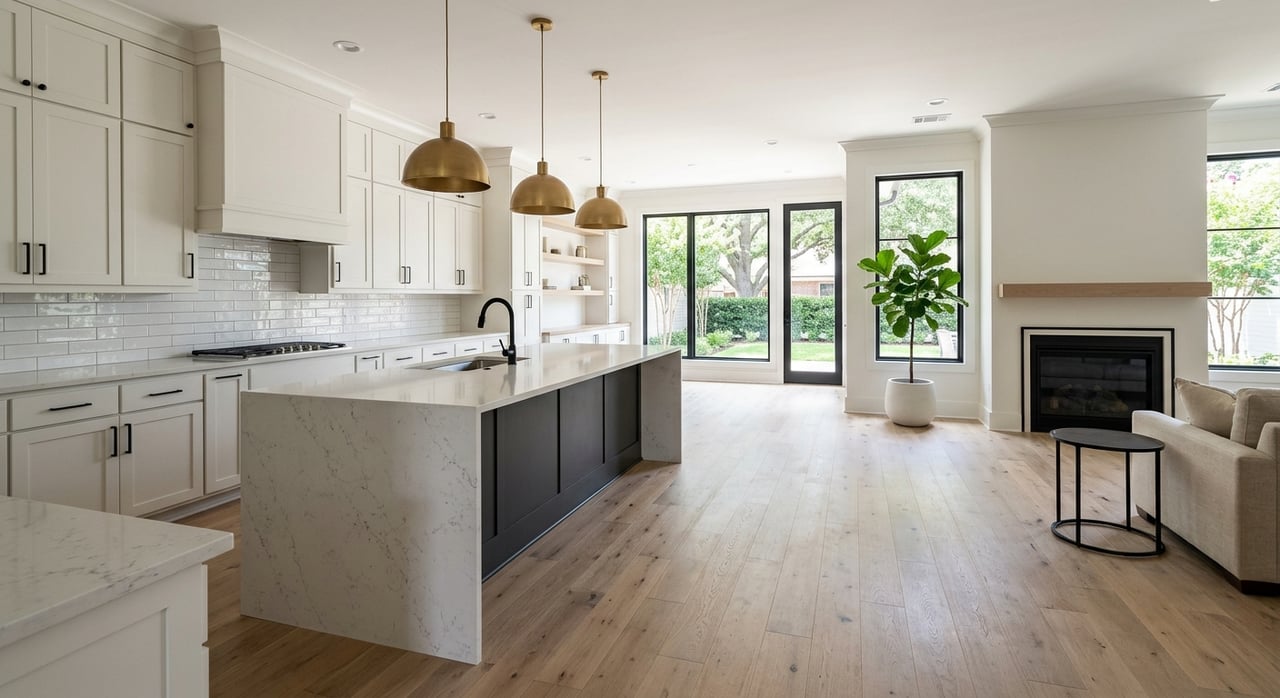
Thinking about buying a brand-new home in Rolesville? You are not alone. Rolesville has been growing quickly, and with that growth comes a steady pipeline of new neighborhoods, townhomes, detached homes, and mixed-use projects. If you are trying to decide whether new construction is the right fit, this guide will help you understand what to watch for, what questions to ask, and how to move forward with more confidence. Let’s dive in.
Why Rolesville draws new-construction buyers
Rolesville has become a popular option for buyers who want a newer home in northern Wake County. According to the U.S. Census Bureau’s QuickFacts for Rolesville, the town’s population reached 11,854 in 2024, up from 9,475 in 2020. The town also says population growth increased 150% from 2010 to 2020, which helps explain why new development remains active.
That growth is not just theoretical. The Town of Rolesville’s development projects page shows an active pipeline that includes detached homes, townhomes, and mixed-use projects such as Parker Ridge, Merritt Property, Rolesville Crossing, The Point, and Pearce Farm. For you as a buyer, that means your options may change over time as new phases open, timelines shift, and additional inventory comes online.
Rolesville also appeals to buyers who want access to the broader Triangle while staying outside the center of Raleigh. The town notes on its Why Rolesville page that it is about 15 miles from downtown Raleigh and roughly 30 minutes from RDU and Research Triangle Park. It also highlights 14 miles of trails and sidepaths on its interactive greenway map, which adds another layer of appeal for buyers comparing newer communities.
Understand the type of new construction
Not every new home purchase works the same way. In North Carolina, there is an important difference between buying a builder-conveyed new-construction home and hiring a builder for a home on land you already own or are buying separately.
According to NC REALTORS guidance, the Offer to Purchase and Contract for New Construction is designed for situations where the seller or builder will construct the home and then convey the improved land to the buyer. If you already own the lot and hire the builder, NC REALTORS says a separate construction contract should be drafted by an attorney, or at minimum reviewed by one if the builder provides the form.
This matters because builder contracts often include terms you would not typically see in a resale deal. NC REALTORS contract guidance notes that mistakes or improper contract terms can significantly affect your rights and interests. It also states that every contract change should be initialed and dated by both parties, which becomes especially important once selections, upgrades, and change orders start piling up.
Know what can differ from resale
A new-construction purchase can feel simpler at first because the home is brand new, but the process is often more layered than a resale purchase. Builder paperwork, deposits, design deadlines, construction timelines, and warranty terms can all create moving parts that buyers need to track carefully.
One area where buyers sometimes make assumptions is inspections. The Consumer Financial Protection Bureau explains that you can include a home-inspection contingency, and if the contract is contingent on a satisfactory inspection, you may be able to cancel without penalty if the results are not acceptable. That is worth discussing early, because inspection rights depend on the contract you sign.
Warranties also deserve a close look. The CFPB and North Carolina Department of Justice both caution buyers not to treat a builder warranty as a replacement for a full inspection. NC DOJ specifically warns that home warranties can include exclusions and private arbitration, so it is smart to read the fine print and understand what is and is not covered.
What the build timeline may look like
Your timeline will depend heavily on the type of home you choose. According to the National Association of REALTORS consumer guide on buying land and building a new home, custom or land-and-build projects often involve a design phase of 3 to 6 months, followed by at least 12 to 16 months of construction. If you want a shorter path to closing, a stock plan or a home already under construction may be a better fit.
If you get in early enough, you may have more flexibility with selections. NAR notes that buyers earlier in the process may be able to choose flooring, tile, lighting, countertops, cabinets, and vanities. If the home is further along, those decisions may already be locked.
In Rolesville, local permitting can also affect timing. The town’s permits and inspections page explains that building permits work through Wake County Inspections & Permits, while some water and sewer permits involve City of Raleigh Public Utilities. The same page notes that CO, COC, and TCO documents are typically issued 2 to 3 business days after Wake County’s final inspection and required sign-offs are received.
That does not mean every home will follow the same exact schedule. Materials, weather, inspections, permit timing, and whether the home is a spec build or a true pre-sale can all affect when you close. If you are balancing a lease, job transfer, or sale of another home, it helps to build in some flexibility.
Ask smart questions during construction
When you are buying new construction, a few practical questions can save you stress later. You want to know what you can still choose, when those choices lock, and how the builder handles changes after that point.
You should also ask about key construction milestones. Questions about when drywall is scheduled, when utilities will be active, and what must happen before closing can help you understand where the build really stands instead of relying on rough estimates.
A simple checklist can help:
- Is this a true builder-conveyed new-construction sale or a lot-plus-build arrangement?
- What finishes and upgrades are still available?
- When do design selections lock?
- What is the estimated timeline for drywall, final inspections, and closing?
- What happens if materials or permitting cause delays?
- What items will be completed before closing versus after closing, if any?
Evaluate the lot, not just the floor plan
It is easy to fall in love with a model home or a floor plan. But in a growing town like Rolesville, the lot and the future surroundings deserve just as much attention.
The town’s Comprehensive Plan 2050 announcement explains that the plan is meant to guide where residential, commercial, and mixed-use growth should go. Combined with the active development projects page, this tells you something important: what is around a lot today may not be what surrounds it a few years from now.
That is why it helps to ask about nearby future phases, planned roads, commercial parcels, stormwater areas, and amenity timing. A lot that backs to open land today may back to another phase later. A quiet edge lot may eventually sit near a future road connection. Those details do not automatically make a lot better or worse, but they do matter for your comfort and expectations.
Review HOA costs and rules early
Many new communities include a homeowners association, and that should be part of your budget and decision-making from day one. According to the NAR consumer guide to HOAs, HOA dues may fund landscaping, maintenance, amenities, reserves, and special assessments. HOA rules may also address topics like parking, pets, exterior changes, and landscaping.
The Consumer Financial Protection Bureau notes that recurring ownership costs should be reviewed carefully, and HOA dues are typically paid directly to the association rather than being folded into your mortgage payment. That means you should factor them into your true monthly carrying cost before you commit.
Ask for the governing documents and review them with care. The monthly dues matter, but the rules matter too. If you expect to make exterior changes later, keep extra vehicles, or have specific pet needs, you will want clarity upfront.
Check flood maps and drainage
Flood and drainage questions should be reviewed lot by lot, even within the same community. The official place to verify flood hazard information is the FEMA Flood Map Service Center. FEMA advises buyers and builders to understand a property’s flood zone before buying or building.
FEMA notes that high-risk flood zones generally begin with A or V on flood maps, but flooding can still happen outside those areas. For that reason, it is smart to look beyond the community entrance sign and review the specific lot itself. Drainage patterns, retention areas, and grading can all influence how a lot functions.
Verify school assignment by address
If school assignment is part of your decision, verify it by the property address, not by neighborhood name or marketing materials. In Wake County, assignment can be lot-specific.
Wake County Public School System provides an address-based school assignment lookup. Using the exact address helps you confirm the current base assignment tied to that property. This step is especially helpful in growing areas where new phases and changing boundaries can create assumptions that do not always match the address record.
Consider phase inspections
A new home is still a home under construction, which means inspections remain important. According to NAR’s guidance on phase inspections, many buyers choose inspections at the foundation stage, pre-drywall, and final punch-out.
That timing matters because once the walls are closed, hidden issues are harder to spot. Phase inspections can help you identify concerns while access is still easier and before the final walkthrough becomes your last major opportunity to raise issues.
NAR also notes that many builders offer a one-year warranty and suggests a 10- to 11-month warranty walkthrough to create a punch list before that first-year coverage ends. That step can be easy to forget after move-in, but it can be very useful.
How a buyer’s agent helps with new construction
Builder representatives can explain their community and process, but you may still want your own advocate. According to NAR’s Behind the Scenes overview, an agent can help with local market insight, sold-price comparisons, HOA information, zoning and deed restrictions, tax and utility verification, inspections, disclosure review, title support, paperwork, and warranty questions.
In new construction, that support often becomes most valuable in the details. Comparing builders, tracking deadlines, coordinating inspections, documenting questions, and staying on top of walkthrough items can make the process feel much more manageable. In a fast-growing place like Rolesville, it also helps to have someone looking beyond the home itself to the future context around it.
If you are exploring new construction in Rolesville and want a calm, organized plan from the start, Stephanie Santiago can help you compare options, ask the right questions, and move forward with more clarity and less stress.
FAQs
What should you know about new construction contracts in Rolesville?
- New-construction contracts may use builder-specific terms that differ from resale contracts, and NC REALTORS says the contract type matters depending on whether the builder is conveying the completed home and land or you are hiring a builder separately.
What inspections should you consider for a new home in Rolesville?
- NAR recommends considering phase inspections at the foundation stage, pre-drywall, and final punch-out, and many buyers also schedule a 10- to 11-month warranty walkthrough.
What can affect a new-construction timeline in Rolesville?
- Timing can shift based on the type of home, design selections, permitting, inspections, materials, weather, and when CO, COC, or TCO documents are issued after final approvals.
What should you review about an HOA in a Rolesville new community?
- You should review the monthly dues, what the dues cover, and the HOA rules that may affect parking, pets, exterior changes, landscaping, and other ownership details.
What should you check around a new-construction lot in Rolesville?
- You should look at flood maps, drainage, future phases, nearby road plans, commercial parcels, amenity timing, and school assignment by the exact property address.
Why use a buyer’s agent for new construction in Rolesville?
- A buyer’s agent can help you compare communities, review contract details, track deadlines, coordinate inspections, and keep the broader context of the purchase in view.