Wondering what it really means to buy a home on land in Youngsville? It can be exciting to picture extra space, a pond, a barn, or room for a future workshop, but acreage properties often come with more moving parts than a typical neighborhood home. If you are thinking about buying in Youngsville, this guide will help you understand what to look for, what to verify, and how to make a more confident decision. Let’s dive in.
Why Youngsville homes on land stand out
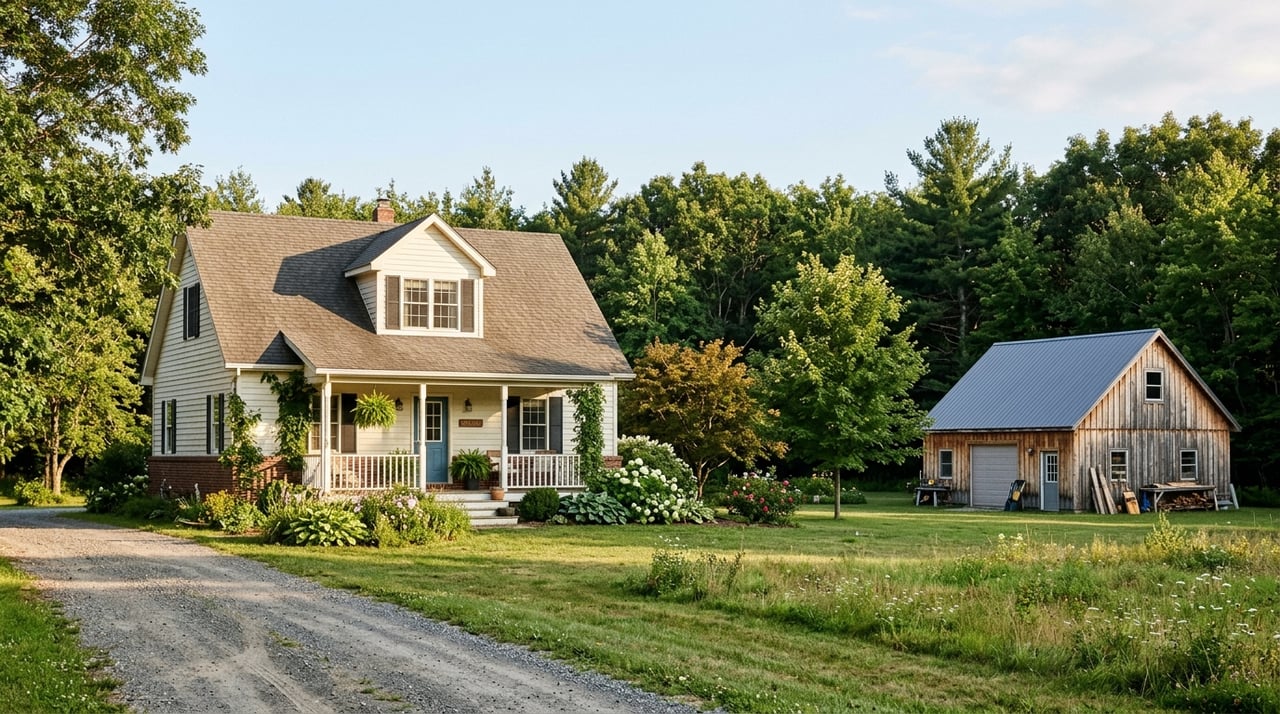
Youngsville offers a real mix of acreage opportunities, which is part of what makes it appealing. Current listing data shows parcels within Youngsville’s residential boundaries ranging from about 1.96 acres to 139.42 acres, with other active searches showing examples like a 1.88-acre ranch with a barn, a 2.67-acre lot with a pond, a 5.897-acre homesite, and a 7.73-acre buildable tract.
That variety matters because “homes on land” in Youngsville do not all look the same. You may find wooded parcels, fenced areas, ponds, barns, horse-farm-style setups, and properties with either public-road frontage or recorded easement access. Some larger-lot homes are also still in planned or gated settings, so extra land does not always mean a fully rural setup.
Acreage means parcel-by-parcel research
One of the biggest differences between a subdivision home and a home on land is that acreage properties need more individual review. Two homes may both sit on multiple acres, but one may be simple and ready to go while the other may involve added checks for septic, access, zoning, or future improvements.
That is especially true in Youngsville, where buildability and use can vary widely from property to property. For example, some listings are clearly presented as buildable homesites or finished homes on acreage, while at least one 2.36-acre parcel is described as having no suitable soils for an on-site septic system and no public sewer available.
Check town limits and ETJ first
Before you get too far into the process, confirm whether the property is inside Youngsville town limits, in the town’s extraterritorial jurisdiction, or outside both. Youngsville’s planning department specifically asks buyers to confirm zoning jurisdiction and property status before moving ahead.
This matters because a parcel can feel rural and still fall under town zoning review. Youngsville says its ETJ extends beyond the corporate limits along the US 1 corridor toward the Wake County line, so location on a map is not always enough to tell you which rules apply.
The town also notes that some addresses that appear connected to Youngsville may still be outside town limits. That is why this step should be addressed early, not after you are already emotionally attached to a property.
Know which office handles what
Acreage purchases often involve several agencies instead of one simple approval path. In Youngsville, the town requires a zoning compliance permit for new uses, expansions, and changes of use, while Franklin County issues building permits.
For well and septic matters, Franklin County Environmental Health is part of the process. The same county office also says existing septic inspections can be required in situations involving detached garages or outbuildings, using an existing septic system for a new home, additions that increase bedrooms or footprint, pools, and other compliance-related situations.
If the property connects to an NCDOT-maintained road, a driveway permit from NCDOT is also required. That means even basic access questions can affect your plans and timeline.
Utilities can vary more than you expect
With a neighborhood home, utility service is often straightforward. With homes on land in Youngsville, utility setup can change from one address to the next.
Franklin County Public Utilities provides water and sewer service to more than 10,000 customers, but service availability is not universal across every parcel. A new account also requires an application and 24-hour notice, which is helpful to know as you plan a move.
Trash service can be different too. Youngsville says residents with in-town addresses receive town solid-waste service and other in-town discounts, while Franklin County says it does not collect waste outside county facilities and that municipalities provide trash and recycling services for their residents.
In practical terms, you will want to verify:
- Whether the home is on public water and sewer or private well and septic
- Whether the address is inside town limits
- Whether trash pickup is provided through the town or needs another solution
- Whether the road access is public frontage or easement-based
Wells and septic deserve close attention
If a property uses a private well or septic system, make that part of your due diligence plan from day one. Franklin County says newly constructed wells are tested for bacteria and 17 inorganic parameters, and North Carolina requires new private wells to be tested before use.
For septic, the main issue is not just whether a system exists, but whether it supports your plans for the property. If you hope to add bedrooms, a detached garage, a barn, a pool, or another improvement, county review or additional inspections may come into play.
This is where acreage buying becomes very site-specific. A beautiful lot can still have limits that affect how you use it in the future.
Think beyond the house itself
When you tour a home on land, it is easy to focus on the house first and the parcel second. In Youngsville, it is usually smarter to look at both together.
Ask yourself how you want the land to function over time. Do you want room for a barn, workshop, garden, pool, detached garage, or future addition? Those goals may depend on zoning, septic capacity, road access, environmental review, and whether the lot is truly buildable for what you have in mind.
That is why a Youngsville acreage purchase is best viewed as a parcel-level decision, not just a house decision. The right property is the one that works for your life now and still supports your plans later.
HOA and restriction details vary
Some buyers start their acreage search assuming more land always means fewer rules. In Youngsville, that is not always the case.
Some current listings specifically mention no HOA or no restrictions, but those details are property-specific, not universal. Other larger-lot homes may still be located in planned or gated settings, so it is important to confirm any HOA, deed restrictions, and use limitations before you move forward.
If you are planning to store equipment, keep animals where permitted, build an outbuilding, or make major exterior changes, this check is especially important.
Prices can swing sharply
Youngsville’s acreage market covers a broad range, and pricing can shift quickly based on improvements, utility access, and location. Current examples include a 4.2-acre lot listed around $252,000, a 7.73-acre tract around $619,000, and a 4.11-acre new-construction home around $1.75 million.
That spread is a good reminder that acreage alone does not determine value. A smaller parcel with better utility access, a finished home, or easier build conditions may be priced very differently from a larger tract that needs more site work.
A smart checklist for Youngsville buyers
If you are considering homes on land in Youngsville, these are the key questions to answer before making an offer:
- Is the property inside town limits, in the ETJ, or outside both?
- What zoning jurisdiction applies?
- Is the home on public water and sewer, or well and septic?
- If septic is present, will it support future plans?
- Does the lot have public-road frontage or recorded easement access?
- If access is on an NCDOT-maintained road, is a driveway permit needed?
- Are there HOA rules or deed restrictions?
- Can you add improvements like a garage, barn, pool, or addition?
- Is the parcel buildable as it sits, or will it need more site work?
- Who handles trash pickup at that address?
A calm, organized review on the front end can save you time, money, and stress later. That is often the difference between a property that only looks good online and one that truly fits your goals.
If you are exploring homes on land in Youngsville, having a steady guide can make the process much easier. Stephanie Santiago brings clear communication, practical local guidance, and a calm step-by-step approach to help you evaluate the property, the land, and the details that matter most.
FAQs
What makes a Youngsville home on land different from a subdivision home?
- A Youngsville home on land usually requires more property-specific due diligence, including checks for zoning, utility service, septic, access, and future improvement options.
How do you check if a Youngsville property is in town limits or ETJ?
- Youngsville’s planning department says buyers should confirm the property’s zoning jurisdiction and status before moving forward, because some rural-feeling parcels may still be subject to town zoning review.
What utilities should you verify for a home on land in Youngsville?
- You should confirm whether the property uses public water and sewer or private well and septic, and also verify trash service and any town-related service differences tied to the address.
What permits might apply to a Youngsville acreage property?
- Depending on the property and your plans, you may need a town zoning compliance permit, a Franklin County building permit, Environmental Health review for well or septic matters, and possibly an NCDOT driveway permit.
Can every Youngsville land parcel be built on right away?
- No. Buildability varies, and some parcels may have soil, septic, sewer, or other site limitations that affect whether you can build as planned.
Do Youngsville homes on land always come with no HOA?
- No. Some listings may state no HOA or no restrictions, but that is property-specific and not true for every acreage home or lot in Youngsville.